Healthcare Runs on Trust.
AI Runs on Algorithms.
Transformation requires alignment.
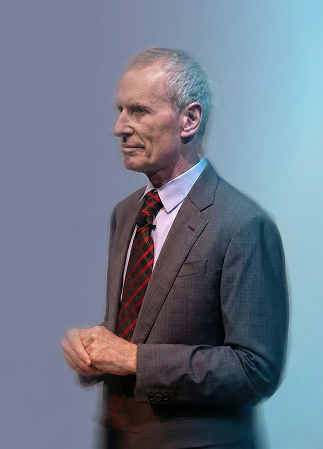
Barry P. Chaiken, MD, MPH is a physician and internationally recognized keynote speaker helping healthcare leaders navigate artificial intelligence, clinical transformation, and patient trust with clarity, credibility, and real-world insight.
What Audiences Experience
Healthcare leaders are being asked to make consequential decisions faster than ever.
Barry’s keynotes create space for disciplined thinking when speed, complexity, and consequence collide—so healthcare and life sciences leaders can move forward without compromising clinical integrity, human trust, or organizational stability.
Organizations invite Barry when audiences expect rigorous insight and physician credibility—not slogans.
Speaking Formats Available
Keynotes
Executive Workshops
Panel Discussions
Fireside Chats
Breakout Sessions
Leadership Roundtables
Implementation That Works Today
Real frameworks. Measurable impact. Lessons drawn from organizations implementing change now.
Technology Meets Human Experience
Insight from both sides—physician and patient, strategist and survivor—grounding innovation in human reality.
Conversations, Not Lectures
Minimal slides. Real dialogue. Time for the questions and decisions that matter most to your audience.
Advisory When You Need More
Some transformations require sustained partnership. Strategic advisory available when deeper engagement is required.
Barry’s Philosophy
Healthcare conversations about change often fall into extremes—hype or fear. Barry offers a pragmatic perspective grounded in clinical reality, public health, and the belief that patients are active partners.
Credibility Built on Experience
Three Decades. Six Continents. One Commitment.
Barry’s perspective is shaped by standing on all sides of healthcare change—as clinician, patient, public health leader, and strategist.
Former Chairperson, HIMSS
EIS Officer, Centers for Disease Control and Prevention
Harvard School of Public Health MPH
Board Certified in Preventive Medicine
International Keynote Speaker Across Six Continents.
Two-Time Cancer Survivor
42-Year Pan-Mass Challenge Rider—Cancer Research Fundraiser

Author of
Future Healthcare 2050
How Artificial Intelligence Transforms the Patient-Physician Journey
Navigating the Code
How Revolutionary Technology Transforms the Patient-Physician Journey
I, Patient (forthcoming)
A Guide for Patients Navigating the U.S. Healthcare System
The Leaders Who Call Barry First
Organizations turn to Barry when the stakes are high, the audience expects substance, and credibility must be earned.
Healthcare Conference Organizers & Associations
Event planners who need speakers delivering insight—not inspiration posters.
Healthcare Systems & Clinical Leaders
Leadership forums where honest conversations about complex change matter more than hype.
Healthcare Technology & Life Sciences
Product launches and executive briefings where physician credibility strengthens trust.
Patient Advocacy & General Audiences
Organizations empowering patients. Barry speaks from lived experience as a two-time cancer survivor.
01
Healthcare Conference Organizers & Associations
Event planners who need speakers that deliver insight, not inspiration posters.
02
Healthcare Systems & Clinical Leaders
03
Healthcare Technology & Life Sciences
04
Patient Advocacy & General Audiences
Shaped by someone who has stood on both sides of the patient-physician relationship.
Attendees are the most important people in the room. Their time must be valued. Their questions must be heard. Their concerns must be addressed.
Barry goes beyond platitudes about innovation. He tells stories that illuminate real decisions—and leaves time for the conversations that matter most.
Real authority is earned through every challenge faced.
Decades at the intersection of clinical care, public health, and technology strategy. The numbers reflect impact and experience. The real measure is in the rooms where consequential decisions are made.
Leading Healthcare Transformation
Keynotes Delivered Worldwide
Lived Patient Perspective
Pan-Mass Challenge For Cancer Research
Your questions. Answered.
Not sure what to expect? These answers might help you feel more confident as you begin.
What makes Dr. Chaiken’s keynotes different?
Dr. Chaiken combines physician credibility, strategic insight, and lived patient experience. His presentations move beyond inspiration to help audiences think clearly about complex decisions involving artificial intelligence, trust, and healthcare transformation.
What do audiences leave with?
Audiences leave with a clearer understanding of how to navigate complex change, evaluate emerging technologies responsibly, and move forward without compromising trust, clinical integrity, or organizational stability.
Is his keynote relevant beyond healthcare?
Yes. While grounded in healthcare, Dr. Chaiken’s insights on trust, leadership, decision-making, and navigating complex systems resonate with executives, policymakers, technologists, and general audiences.
How does he engage audiences?
Dr. Chaiken emphasizes dialogue, reflection, and real-world decision scenarios. He uses minimal slides, encourages audience participation, and always leaves time for meaningful questions and discussion.
Will he customize his keynote for our event?
Always. Every engagement begins with a planning conversation to understand your goals, audience profile, and desired outcomes. Dr. Chaiken integrates your themes and priorities to ensure relevance and impact. He does not deliver the same talk twice.
How far in advance should we book?
Most engagements are scheduled three to six months in advance, though last-minute requests are sometimes accommodated depending on availability.
Ready to Bring
Clarity, Credibility, and Trust to the Conversation?
Dr. Chaiken is available for keynotes, workshops, and panel discussions at conferences, leadership summits, user events, and association gatherings worldwide.
Tell Us About Your Event or Inquiry.
Please share event or project details, timing, and how Dr. Chaiken may assist.