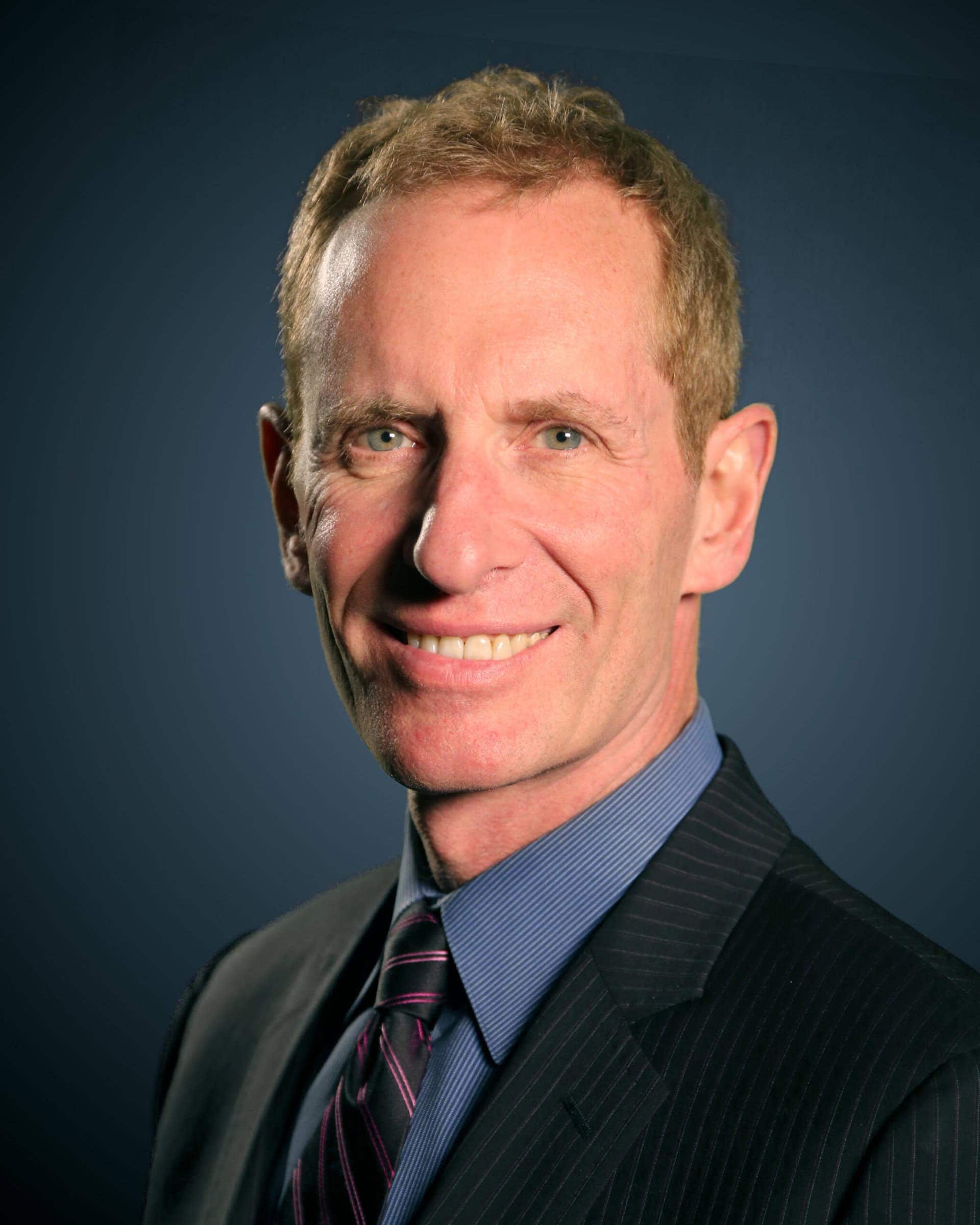
Barry P. Chaiken, MD
Physician • Innovator • Healthcare Thought Leader
“Helping organizations combine clinical insight, innovation, and strategy to transform healthcare delivery.”
Contact Me
Future-Primed Healthcare Newsletter
Weekly insights on healthcare trends, AI, digital innovation, and patient care.
Dr. Barry P. Chaiken, MD, MPH, is a renowned international keynote speaker and thought leader at the forefront of healthcare innovation. With over 25 years of experience, Dr. Chaiken has become a driving force in integrating artificial intelligence and technology in healthcare, with a global impact.
His captivating presentations, delivered at conferences worldwide, explore the transformative potential of AI in enhancing patient experience, optimizing clinical outcomes, and revolutionizing healthcare delivery. As the author of Future Healthcare 2050 and Navigating the Code, Dr. Chaiken offers unparalleled insights into how cutting-edge technology reshapes the patient-physician journey.
Featured Articles
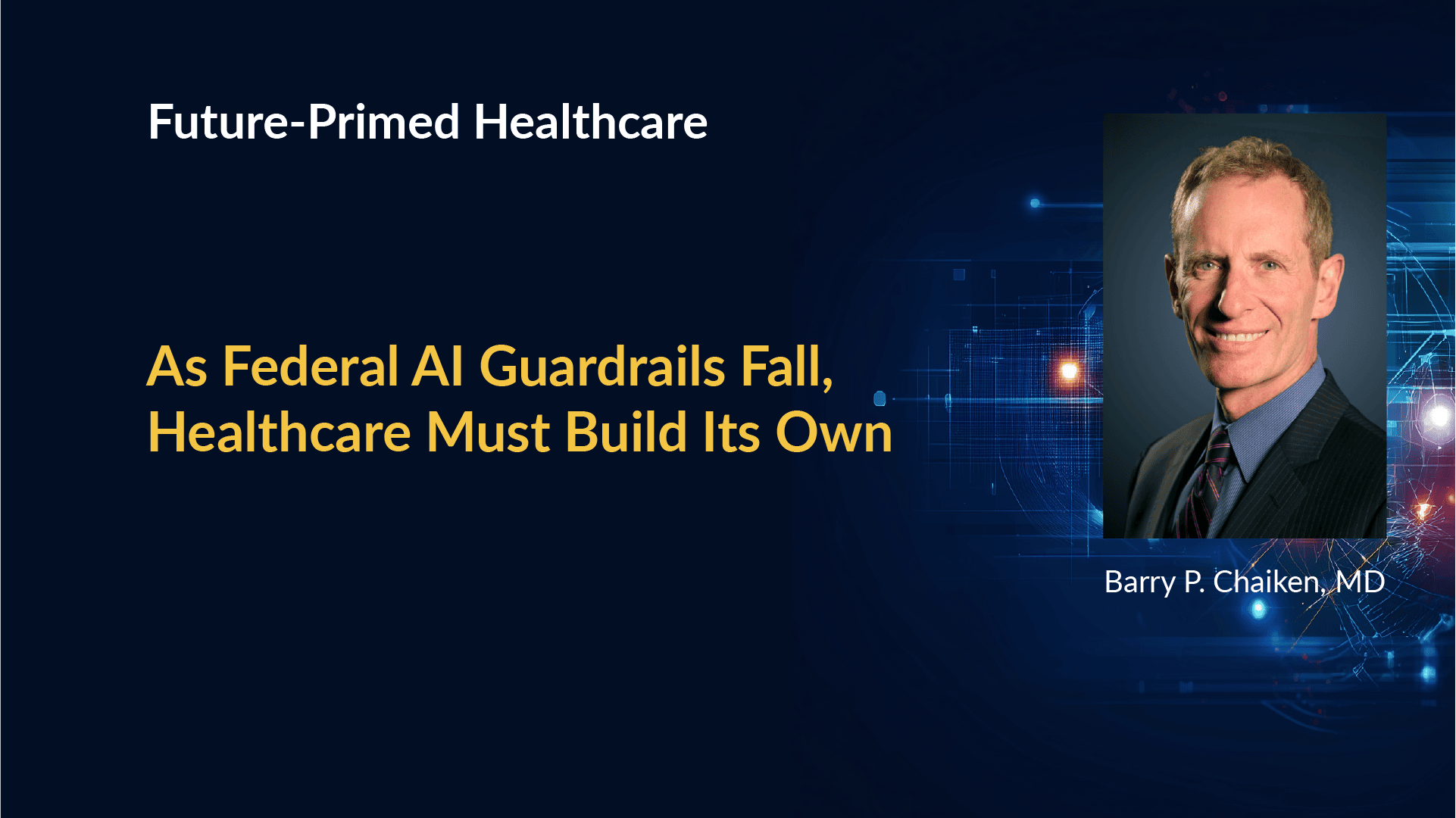
As Federal AI Guardrails Fall, Healthcare Must Build Its Own
Deepfakes are growing more sophisticated. AI generates photographs and videos that we cannot distinguish from those captured by cameras. Social feeds fill with synthetic content mimicking reality with unsettling precision. Industries focused on entertainment, commerce, and social connection already wrestle with misinformation and the need for human guidance. These concerns become even more critical when patients’ lives are at stake. Healthcare AI hallucinations—outputs generated by statistical probabilities but ungrounded in clinical reality—pose much higher risks than a misleading social media post. Continue reading→
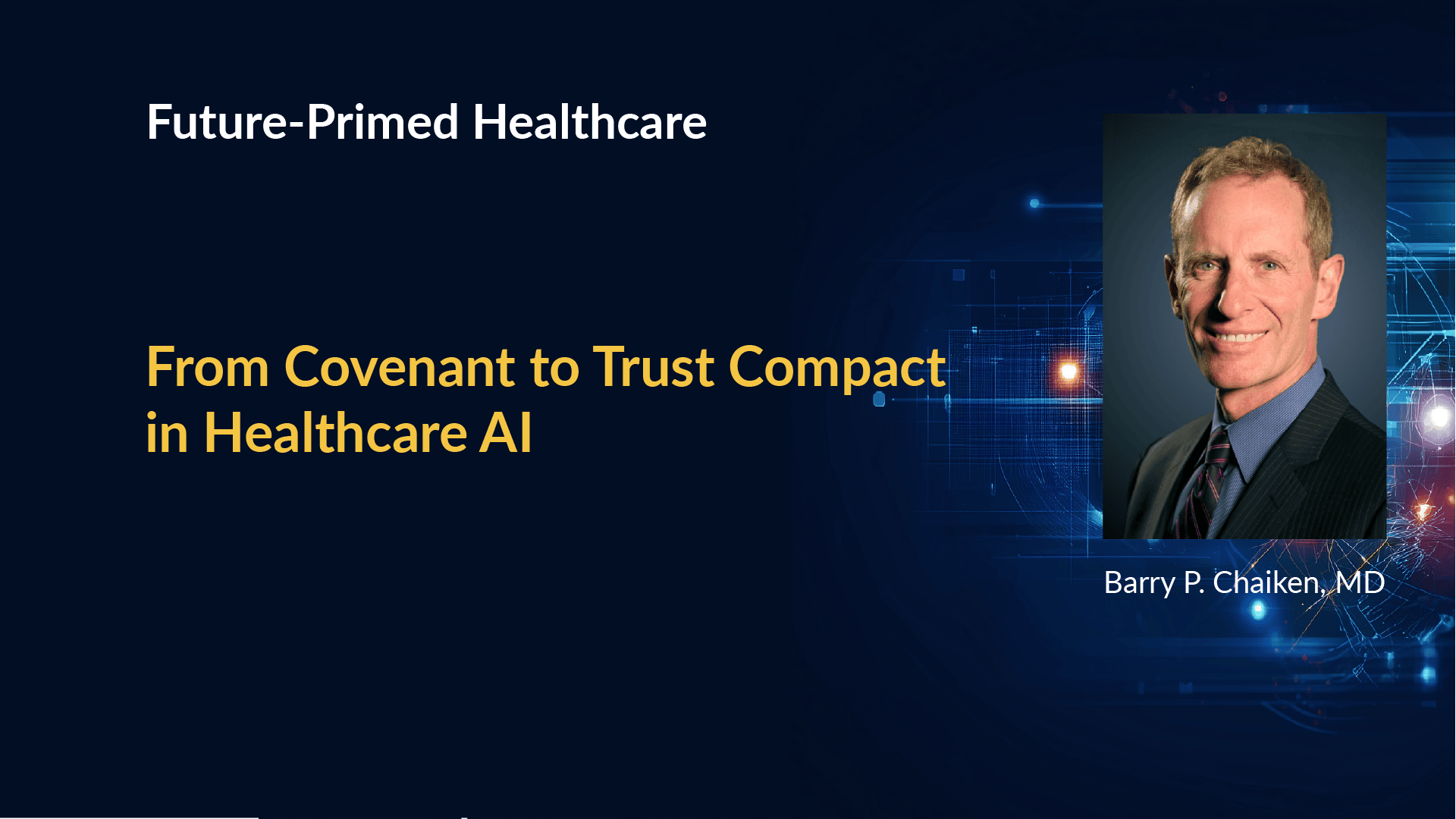
From Trust Covenant to Trust Compact in Healthcare AI
Most of AI’s progress has occurred not at the bedside but within the infrastructure of care—largely invisible to patients yet profoundly reshaping how care is delivered. Ambient listening technologies now capture and summarize clinical encounters, reducing the documentation burden that has weighed heavily on physicians for years. Digital assistants and chatbots respond to routine patient questions, manage scheduling, and bridge communication gaps that once led to frustration and inefficiency.
Tools such as OpenEvidence go further, analyzing medical literature in real time to help physicians. Continue reading→
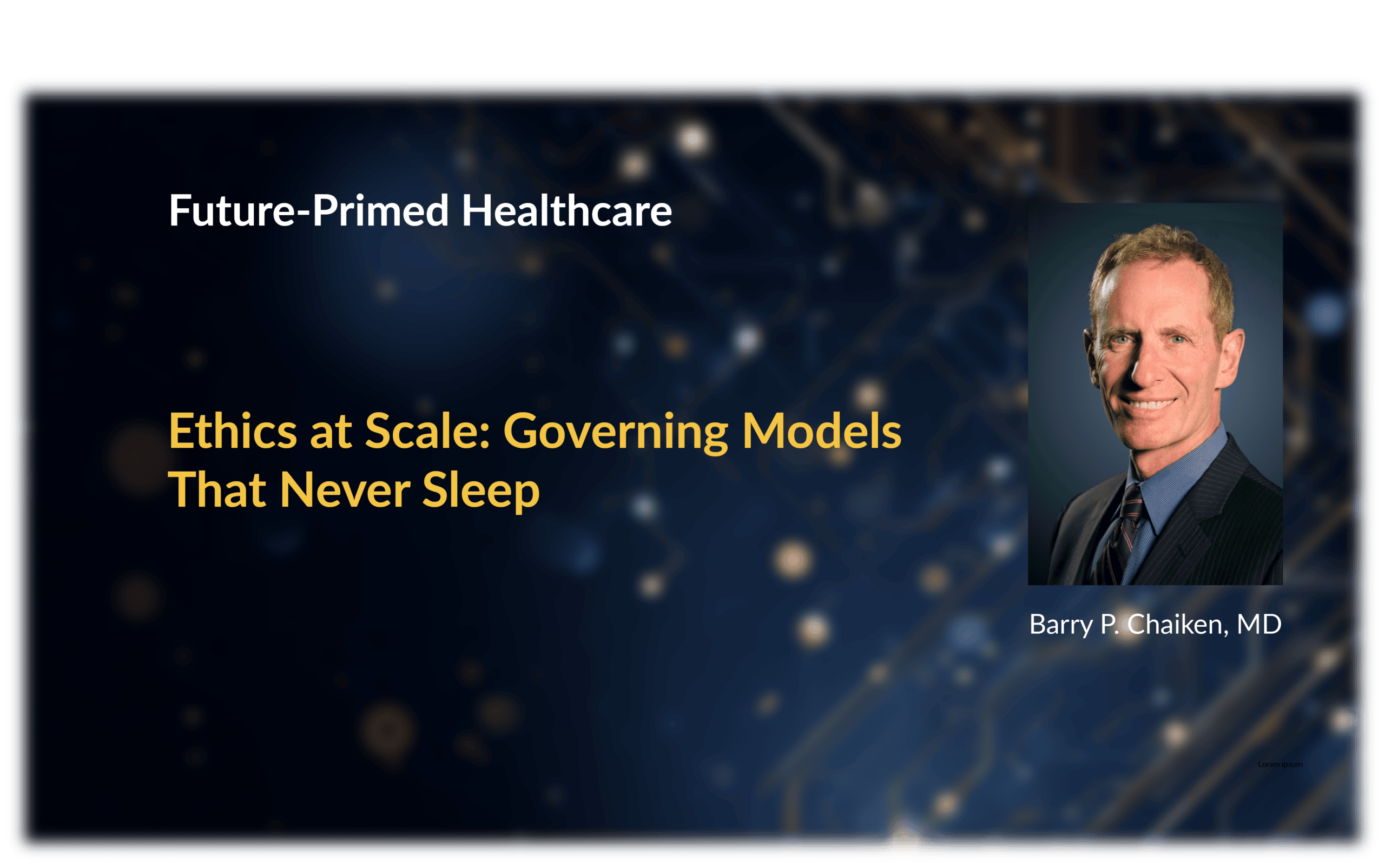
Ethics at Scale: Governing Models That Never Sleep
Every medical innovation before AI—from the stethoscope to magnetic resonance imaging—served as an extension of human skill, amplifying perception while preserving empathy, because the clinician remained entirely in control. Artificial intelligence is different. It shifts part of that control to machines, which make decisions without empathy, moral intent, or lived experience—replacing human judgment with statistical inference. An algorithm can identify patterns, yet only a person can understand what those patterns mean for a human life.
Morals, empathy, and purpose guide humans. Machines are not. They have no sense of duty, no capacity for remorse, and no concept of justice. They execute mathematical rules that describe the world but never experience the weight of moral choice within it. Continue reading→

Patient Data, Patient Power: The Next Revolution in Trust
Hospitals collect an ocean of patient information: lab results, imaging data, clinical notes, and genetic profiles. These data train algorithms that predict disease, guide treatment, and even decide insurance eligibility. Yet to most patients, the process is invisible. What happens to their data after a hospital visit remains as mysterious as the financial ledgers that once hid a bank’s actual condition before the stock crash of 1929.
Clinicians, too, experience this opacity. Two-thirds of physicians now use AI in some form, according to the American Medical Association’s 2024 report, yet many cite a lack of transparency as the chief barrier to trust. Continue reading→
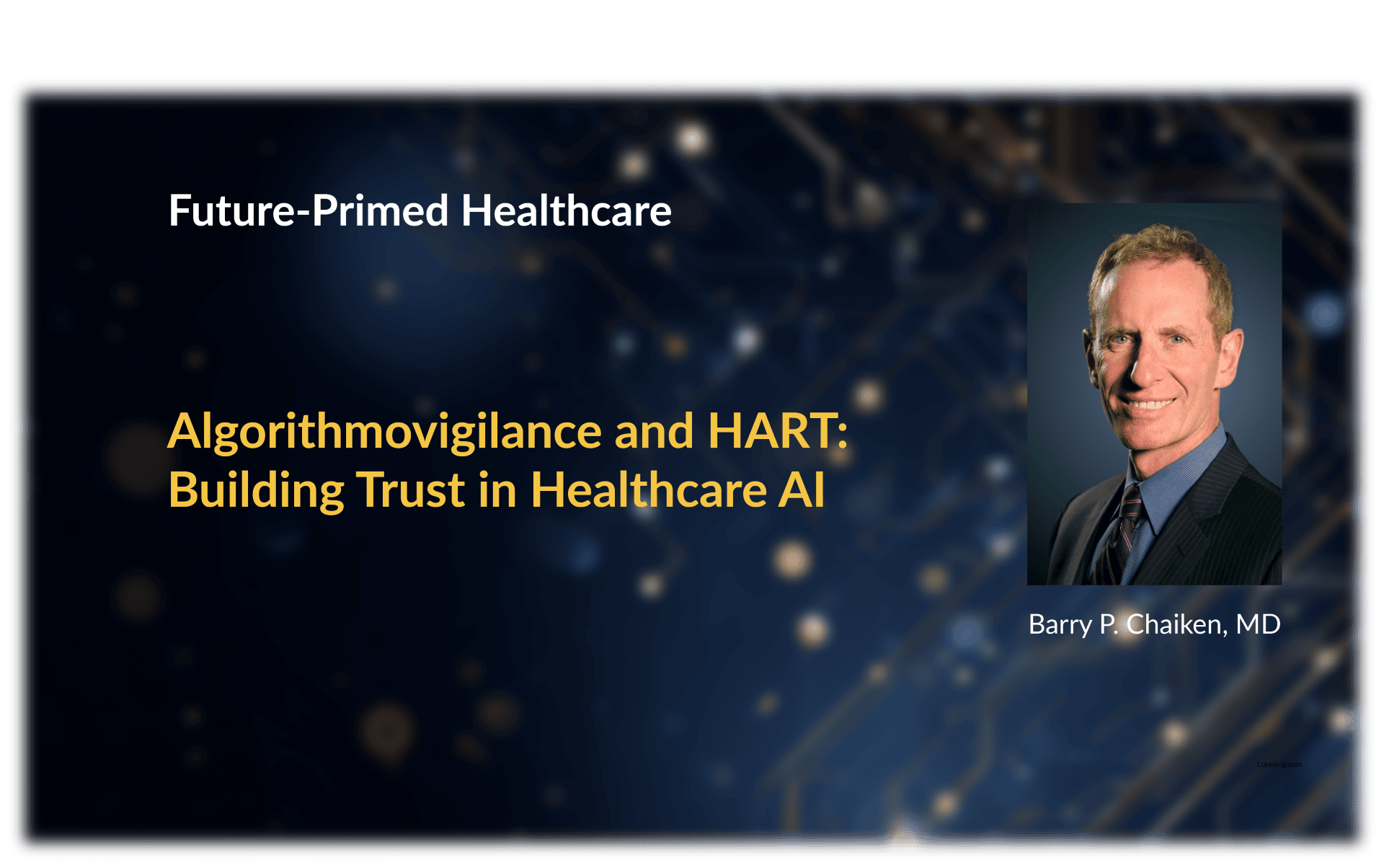
Algorithmovigilance and HART: Building Trust
In the early 1960s, the sedative thalidomide was withdrawn from markets worldwide after thousands of infants were born with severe congenital disabilities. From that loss emerged a new discipline—pharmacovigilance—the systematic, continuous monitoring of drugs after approval. It transformed patient safety from a one-time regulatory act into a living, learning process.
Today, healthcare stands at a similar inflection point. Artificial intelligence is becoming medicine’s newest therapeutic tool—one capable of diagnosing, predicting, and guiding treatment—but it evolves continuously. Unlike a pill, an algorithm does not remain stable once released. We therefore require a new form of vigilance: algorithmovigilance, the post-deployment discipline that keeps AI accountable long after launch. Continue reading→
Trusted by Leading Organizations
From international conferences to advisory boards, Dr. Chaiken has supported leaders across healthcare.











Contact me
For speaking engagements, contact Aleise Matheson & Sharon Parker at info@drbarryspeaks.com or 804-464-8154
For consulting or strategic advising, contact Dr. Chaiken at info@docsnetwork.com
Connect with me on